
mono-color-skill
One-ink editorial print image skill — warm paper, halftone photography, active negative space, and restrained typography.
 yanliudesign
- 评测生成时间(北京时间)
- 本报告引擎
- v3.10.0
- 当前引擎
- v3.16.0
本报告与当前引擎使用不同规则;原分数不会自动更新,不同版本的分数不宜直接对比。
进入后确认来源与额度,提交才会创建任务。
综合采用结论
证据充分,整体质量与安全表现优秀
- 基础评测完成+25/25确定性评分与静态安全扫描已完成
- README 有效证据+25/2514,299 个去重后的有效字符
- 独立证据来源+8/202 类非重复证据,重复文件不叠加
- 仓库元数据+10/10已取得仓库状态与采用数据
- 活跃记录+5/5已取得最近提交时间
- AI 复核+15/15已完成结构化 AI 证据复核
单色技能工作流程
README 'How it works' 列出五个连续步骤,从读取输入到生成检查,属于单一任务的连续处理流程。
左右滑动查看完整图示
- • README 'How it works' 列出五个步骤
- • 步骤1: 读取输入并识别主题、意图、文字和图像角色
- • 步骤5: 检查油墨数量、身份、层次、纹理和原创性
- README 'What it does' 表格列出输入、调色板、模式、图像、空间、类型、输出
- README 'Ink system' 提供单色和双色配方及十六进制色值
- README 'Install' 提供git clone命令和重启说明
- README 'Try it' 提供多个示例提示词
- README 'Stability and validation' 描述默认参数和验证脚本
- 问题与用途描述
- 有效 README
- 安装或接入步骤
- 可执行示例
- 未发现已知高风险模式
- 缺少错误处理或排障
- 缺少错误处理或排障指南
- 设计系统目录内容未在README中详细展示,依赖内部文件
- 安装步骤仅针对Claude Code,其他环境需自行加载SKILL.md
- 未明确说明图像生成工具不可用时的具体降级行为
海报、杂志、包装等编辑印刷设计、需要单色或双色印刷风格的用户、希望保持视觉一致性的系列设计、需要可复现的生成提示和配方
需要全彩或复杂渐变的设计、需要3D渲染或电影场景效果、需要复制特定参考海报或艺术家风格、需要自动复古或做旧效果
也有自己的公开项目?先看完证据,再用当前规则生成独立报告。
评测我的项目 →静态扫描不是安全保证,生产接入前仍应人工复核权限和数据边界。
- 01补充错误处理或排障
方法、证据与局限展开收起
GitHub Repository API
2 个文件 · 50,935 字符
v3.10.0 · AI 复核已启用(deepseek-chat)
- 静态评测不会安装或执行项目代码
- 安全扫描基于高信号文件与已知模式,不能替代人工审计
- 流行度只反映采用程度,不代表安全或工程质量
30 天热度趋势
README
中文 · English
Monocolor Editorial Print
A one-ink and controlled two-ink editorial image skill for posters, zines, portraits, packaging, and visual field notes.





Turn a theme, sentence, object, or supplied photograph into an original editorial image. The skill defaults to controlled two-ink with one dominant plate and one narrowly assigned accent plate. Explicit one-ink or monochrome requests remain pure one-ink. White, cool gray, or pale-beige substrates are selected from the image and palette; contemporary editorial is the default, while vintage treatment appears only when requested.
It preserves a visual system rather than copying a reference. Every composition is rebuilt around the subject, intent, words, and image role.
Selected examples
| Summer cycling | Field study | Ordinary spaces |
|---|---|---|
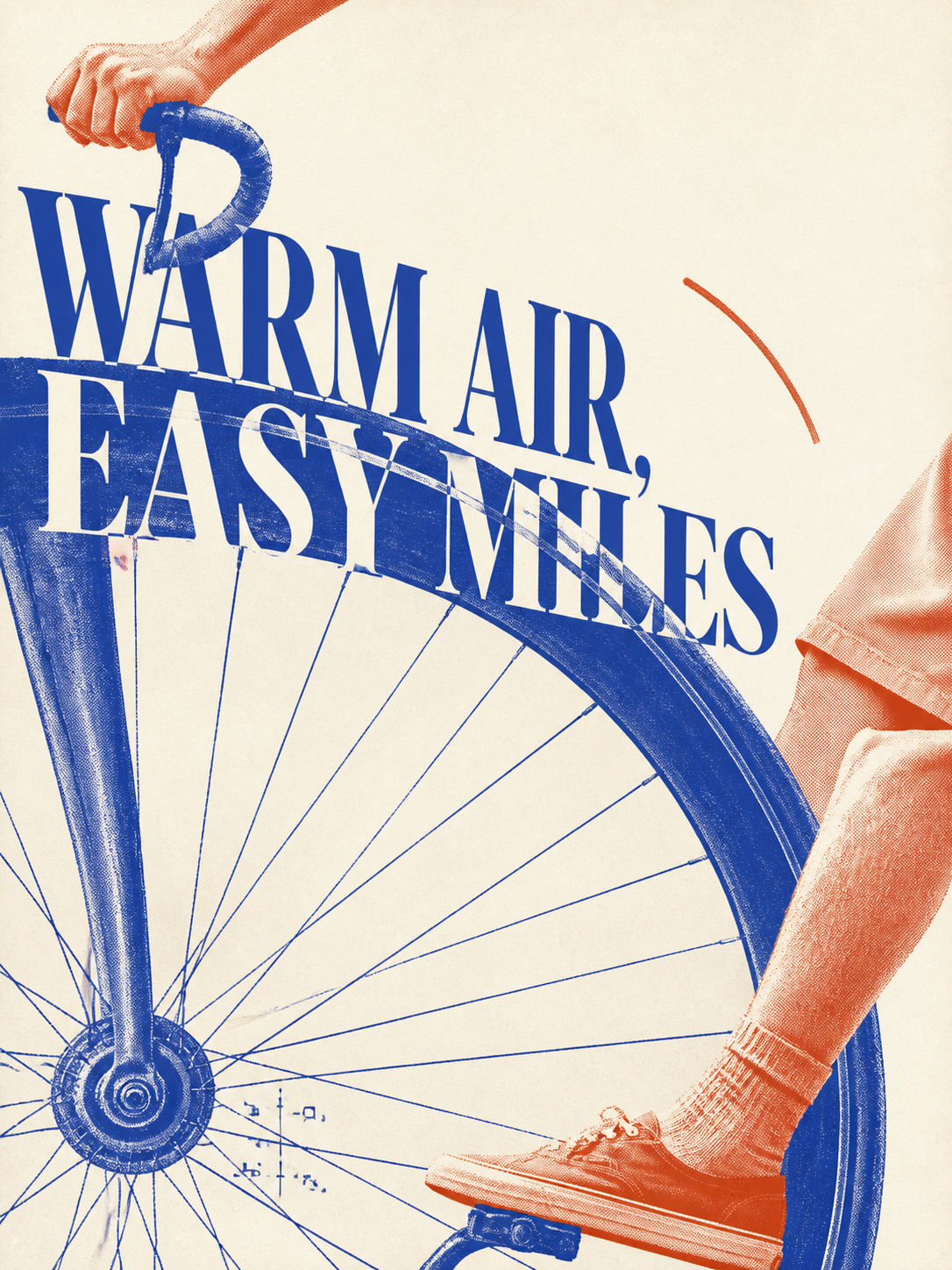 | 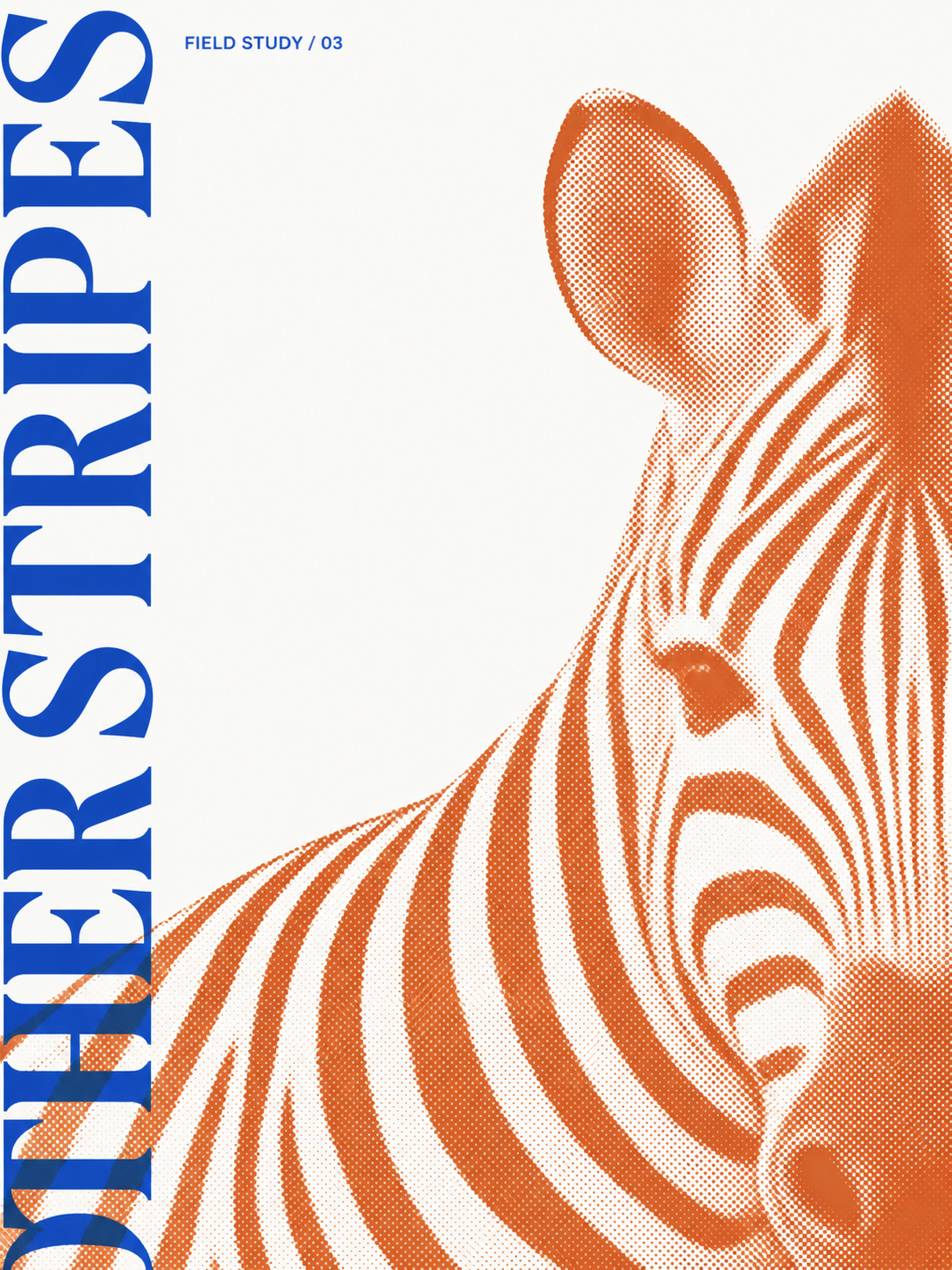 | 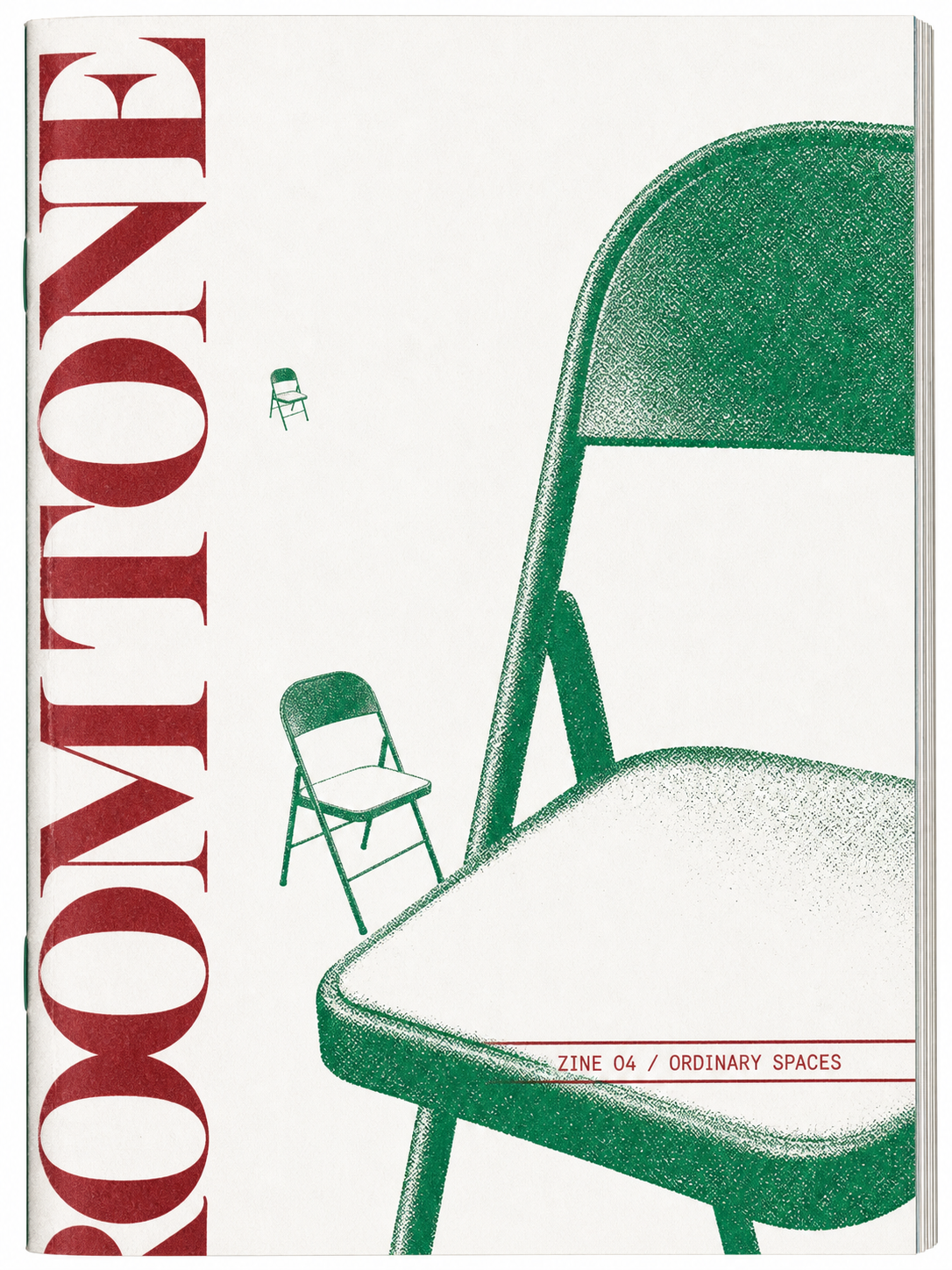 |
| Sardine packaging | Headphone packaging | Sunscreen packaging |
|---|---|---|
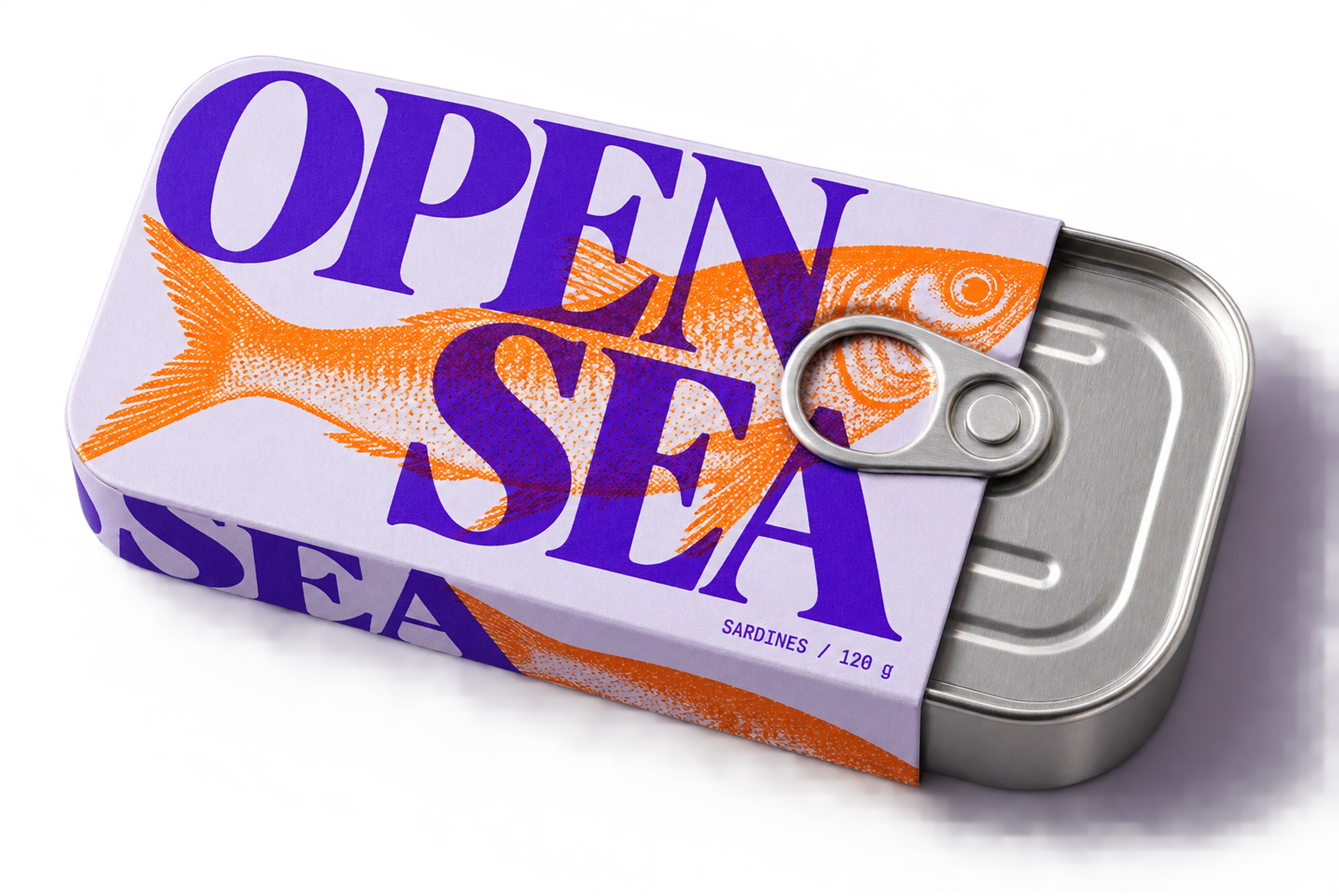 | 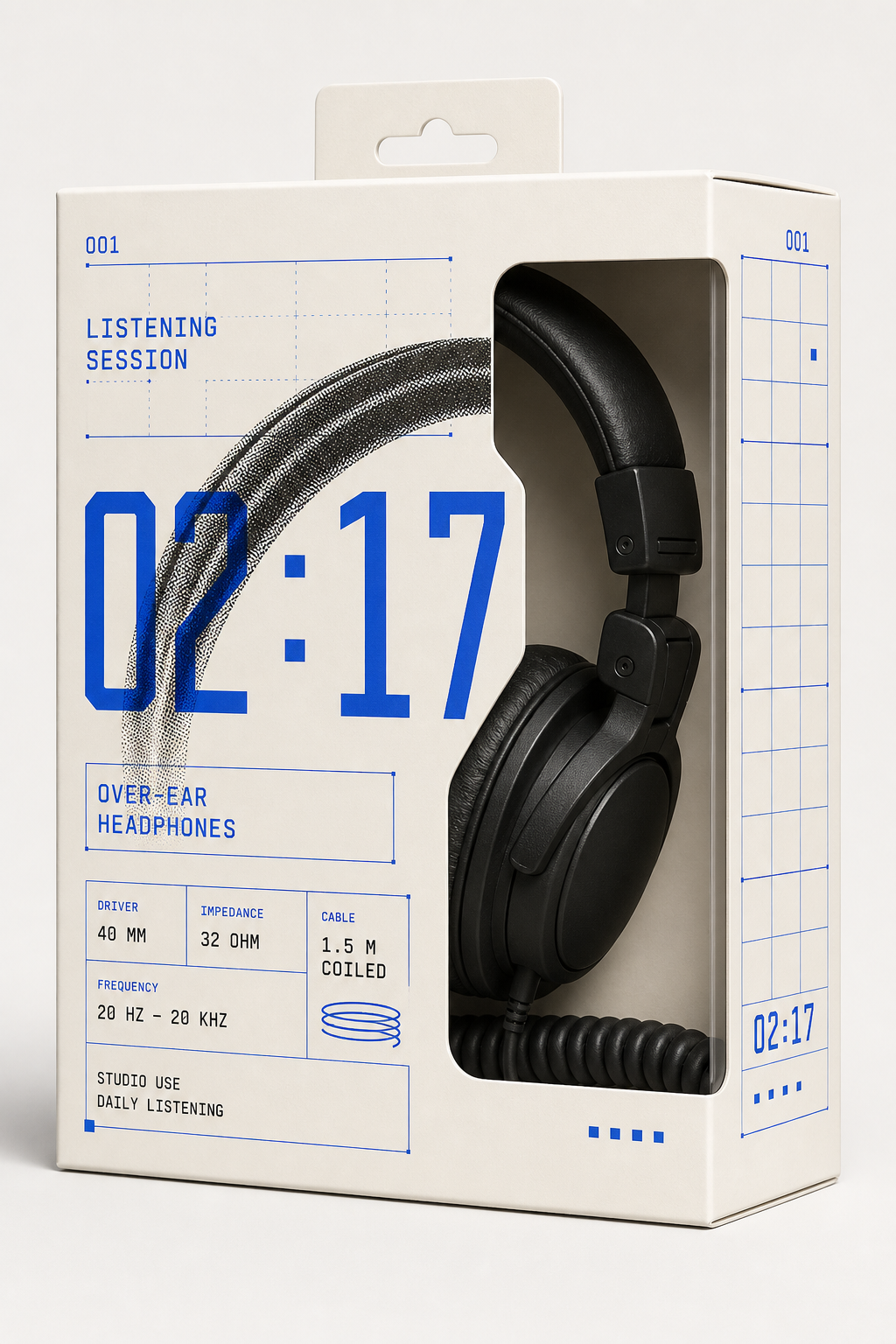 | 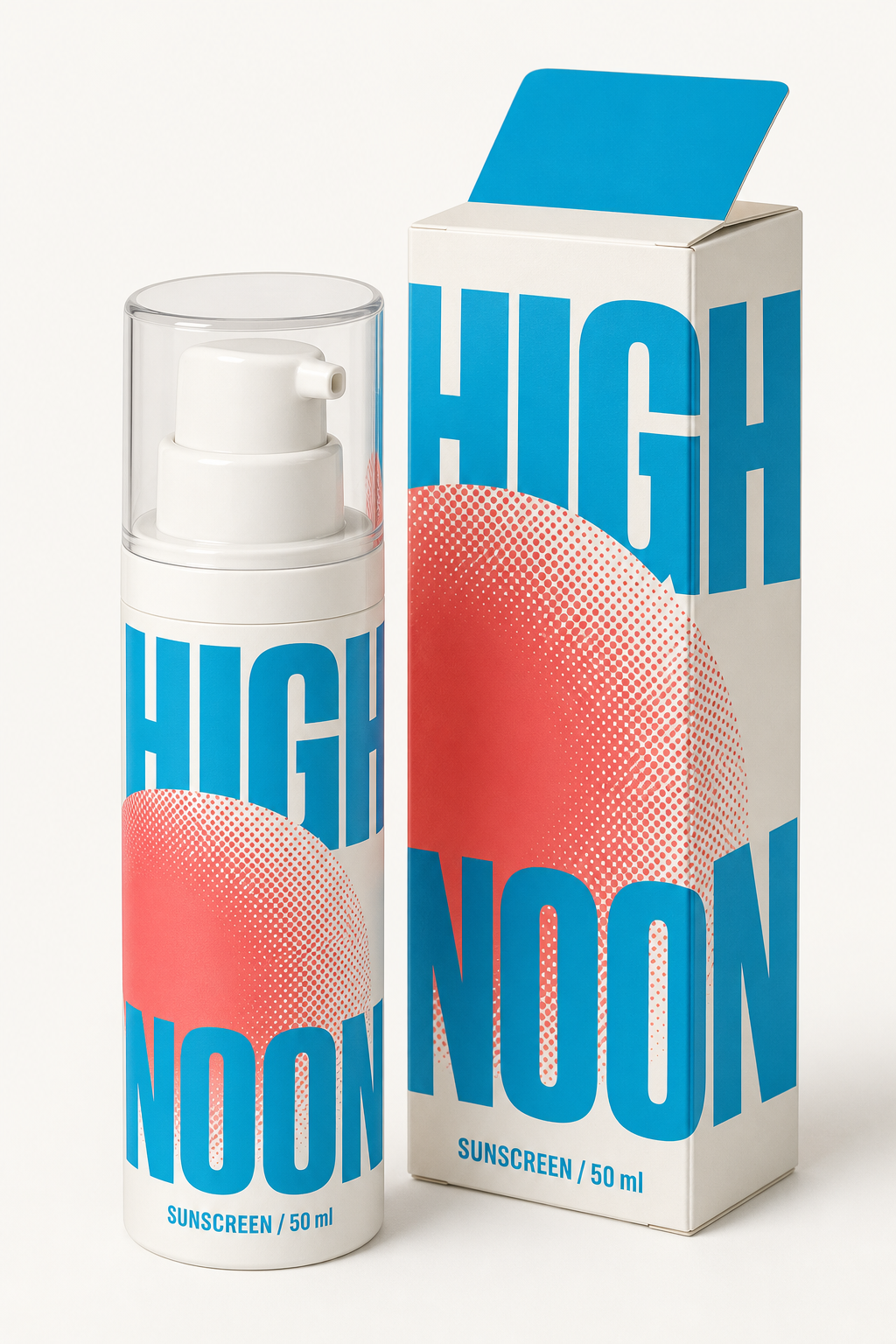 |
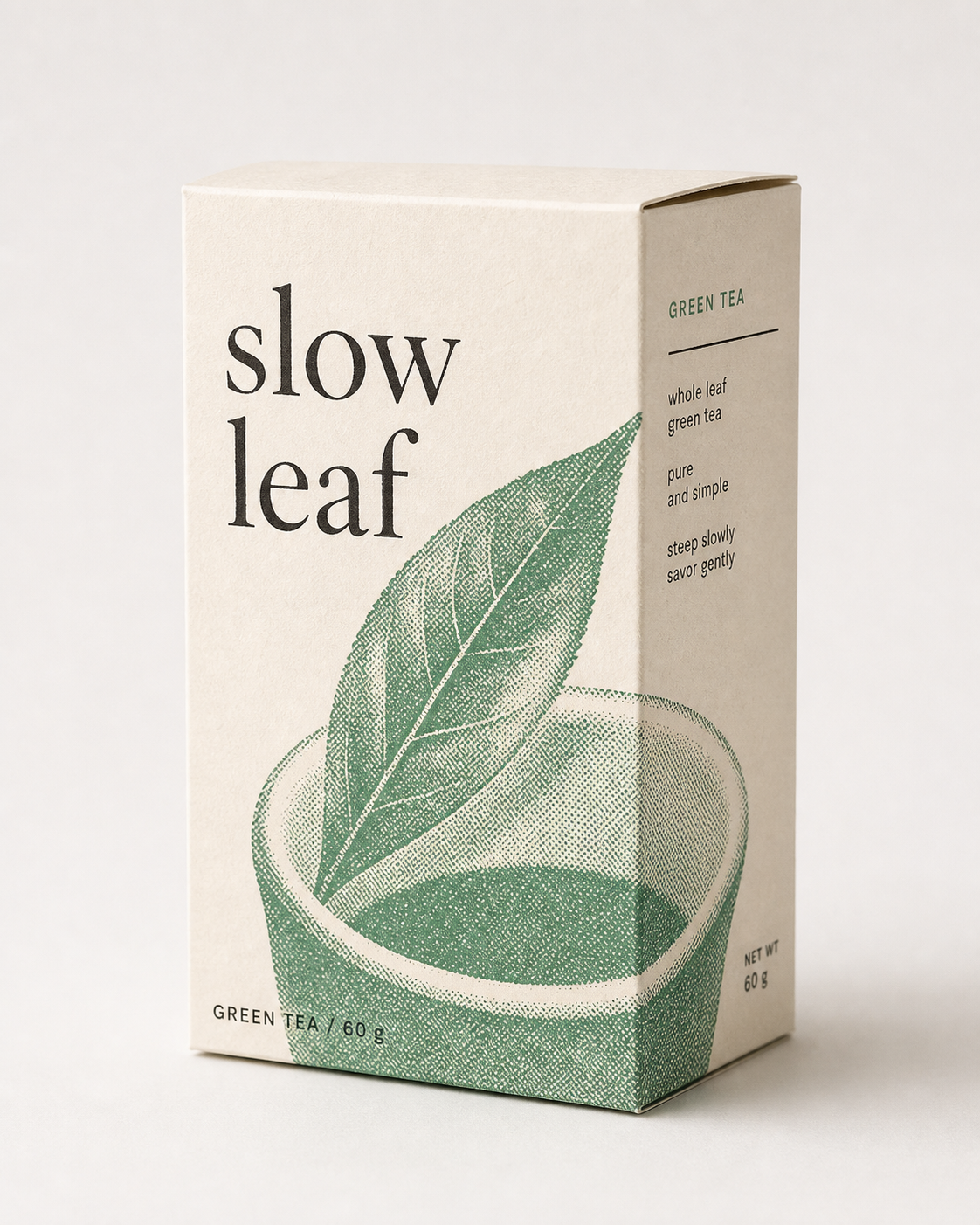
| A little warmth | Brand merchandise | Slow leaf |
|---|---|---|
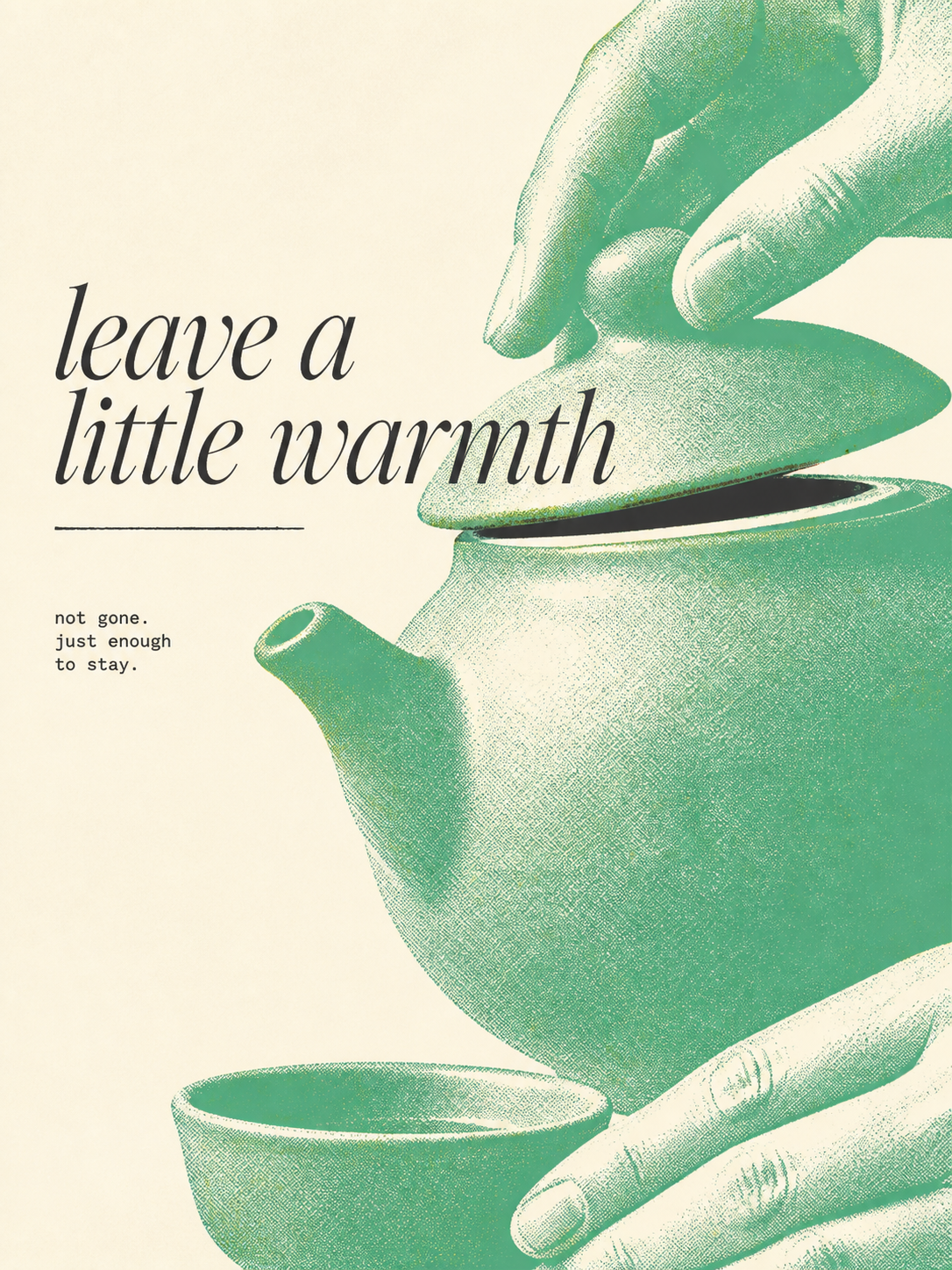 | 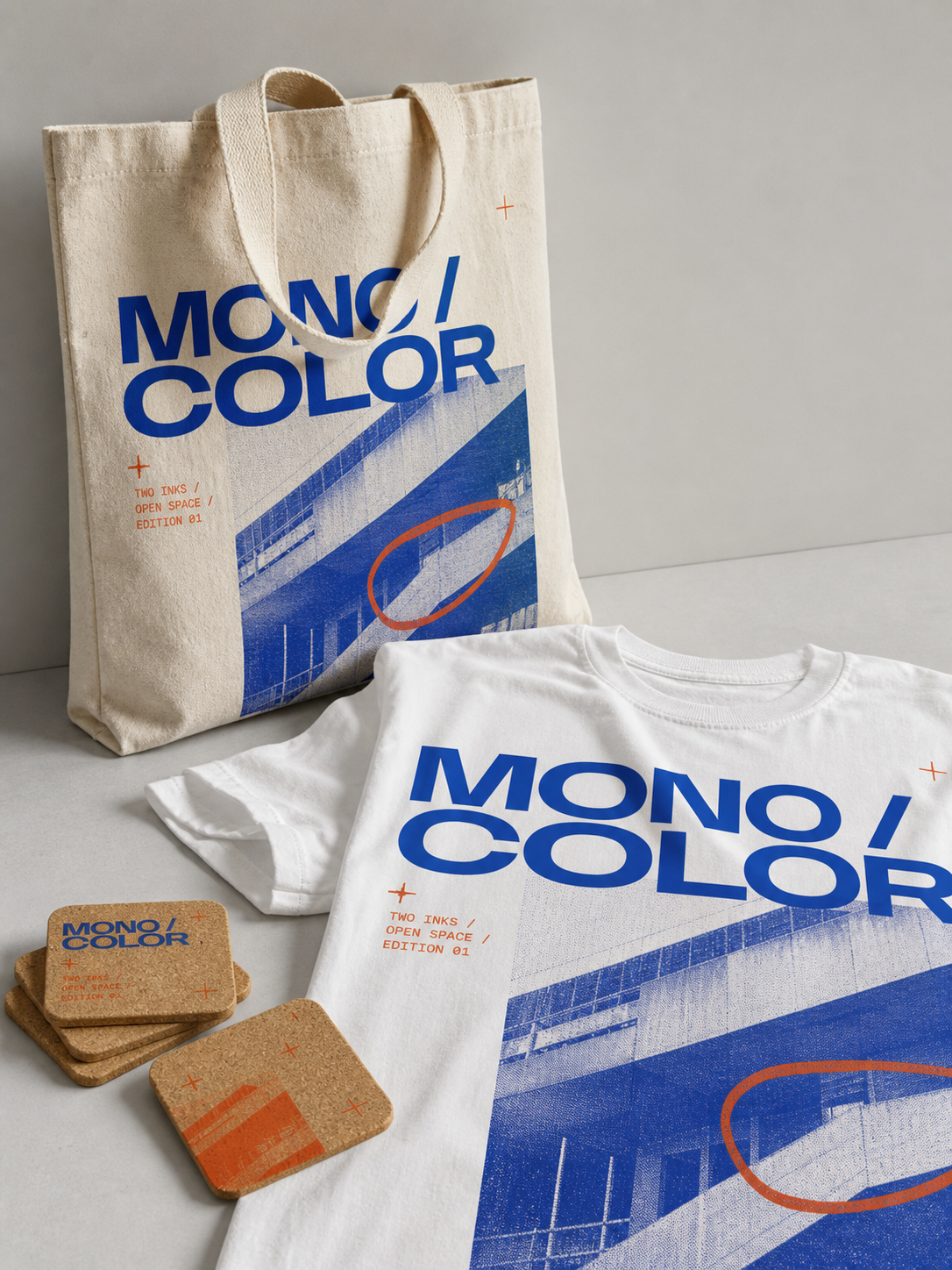 |  |
| Night photography | Sunday radio | Night market |
|---|---|---|
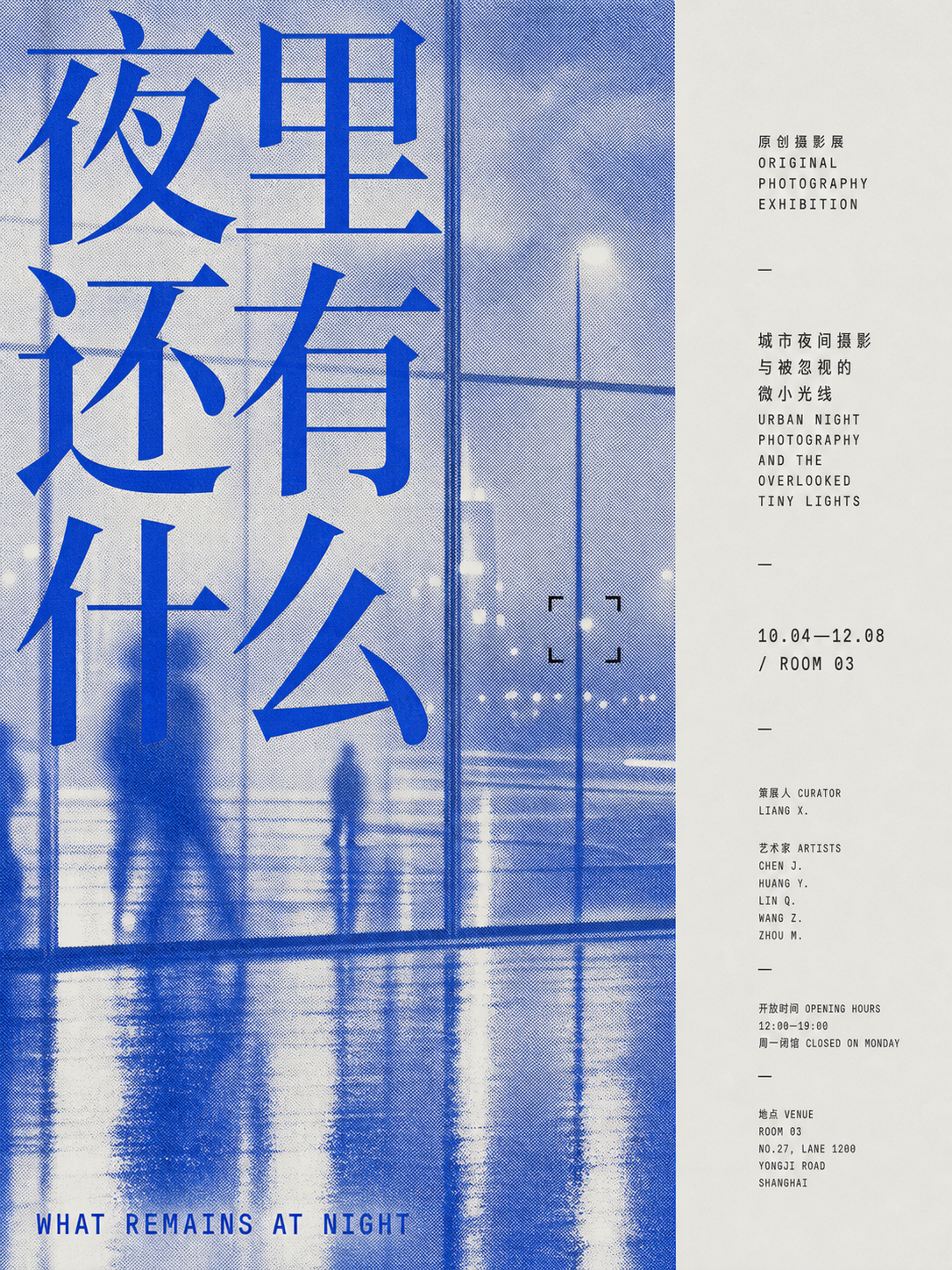 | 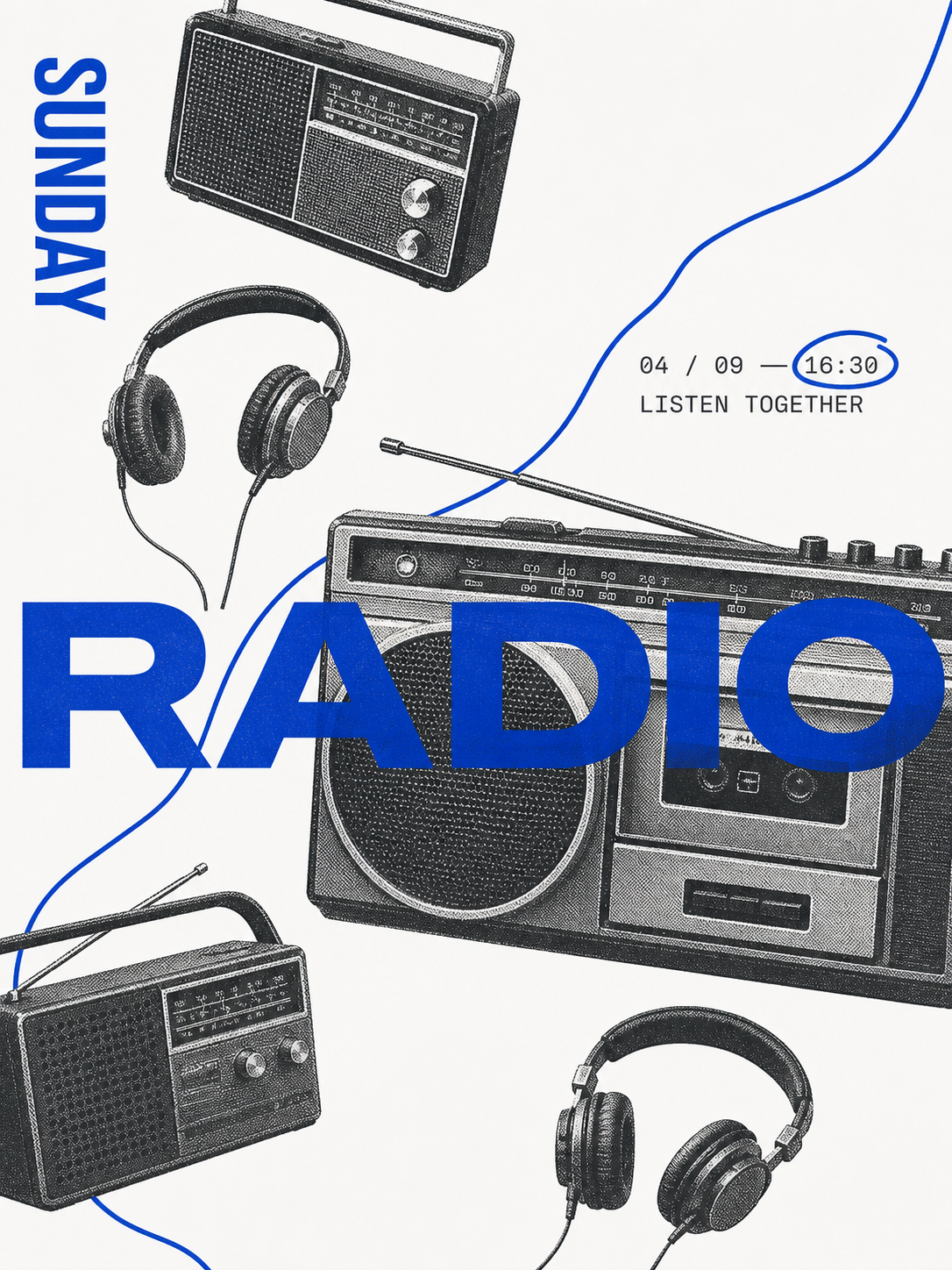 | 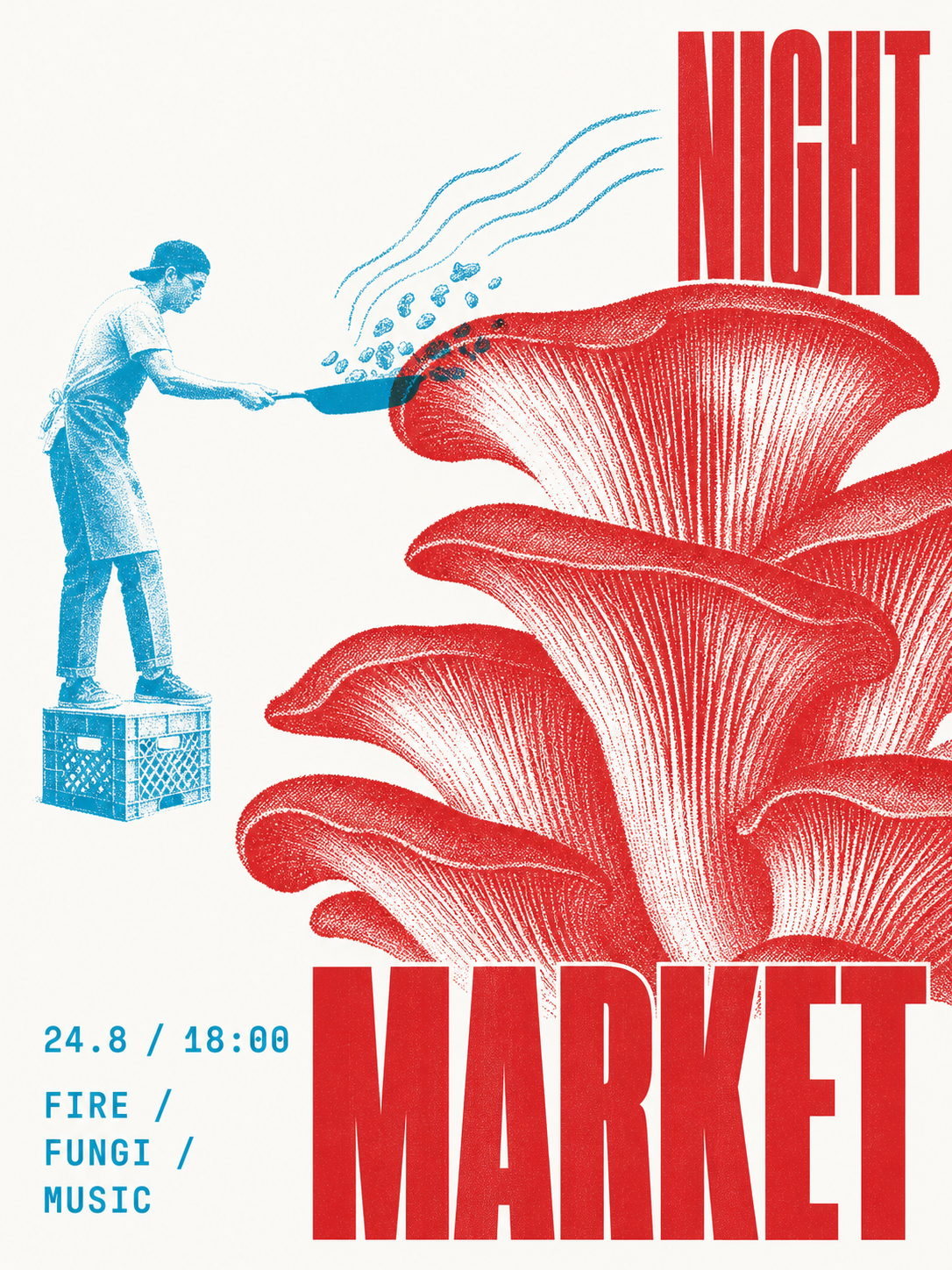 |
These original generated examples demonstrate the skill's range; they are outputs, not templates to reproduce.
Visual references
The visual system was informed by a twelve-image research set. See Visual References and Attribution for the complete image index, research notes, attribution status, and correction link. Third-party references remain the property of their respective creators and rights holders.
| 01 | 02 | 03 |
|---|---|---|
 |  |  |
| 04 | 05 | 06 |
 |  |  |
| 07 | 08 | 09 |
 |  |  |
| 10 | 11 | 12 |
 |  |  |
What it does
| System | Direction |
|---|---|
| Input | A theme, phrase, object, article idea, or supplied photograph |
| Palette | Adaptive neutral white, cool gray, or pale beige + controlled two-ink by default; explicit one-ink requests stay one-ink |
| Modes | Pure one-ink, chromatic + black, complementary duotone, or overprint duotone |
| Image | Halftone, risograph grain, cyanotype exposure, or photocopy breakup |
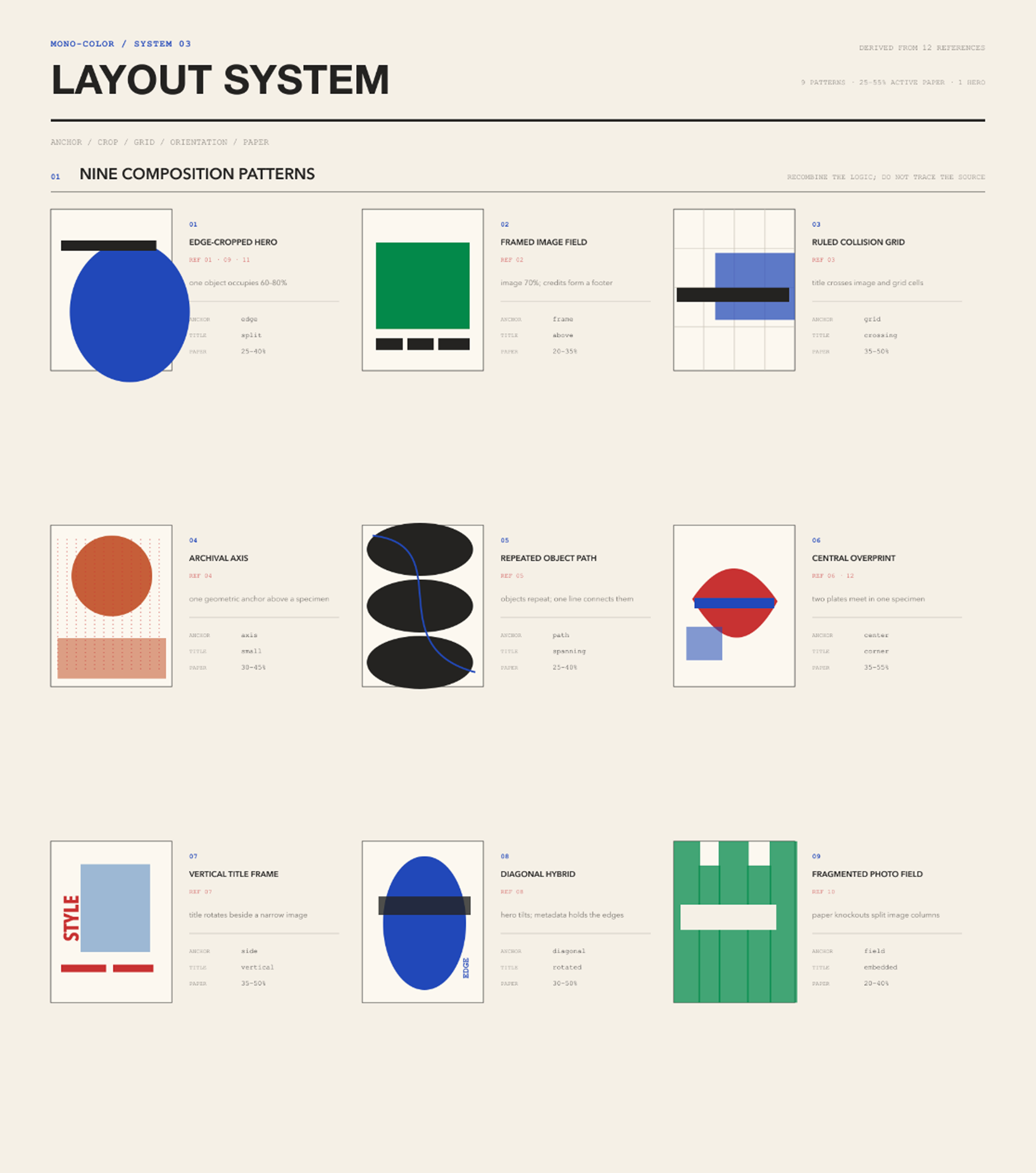
| Space | 25%–55% visible empty paper on an asymmetric editorial grid |
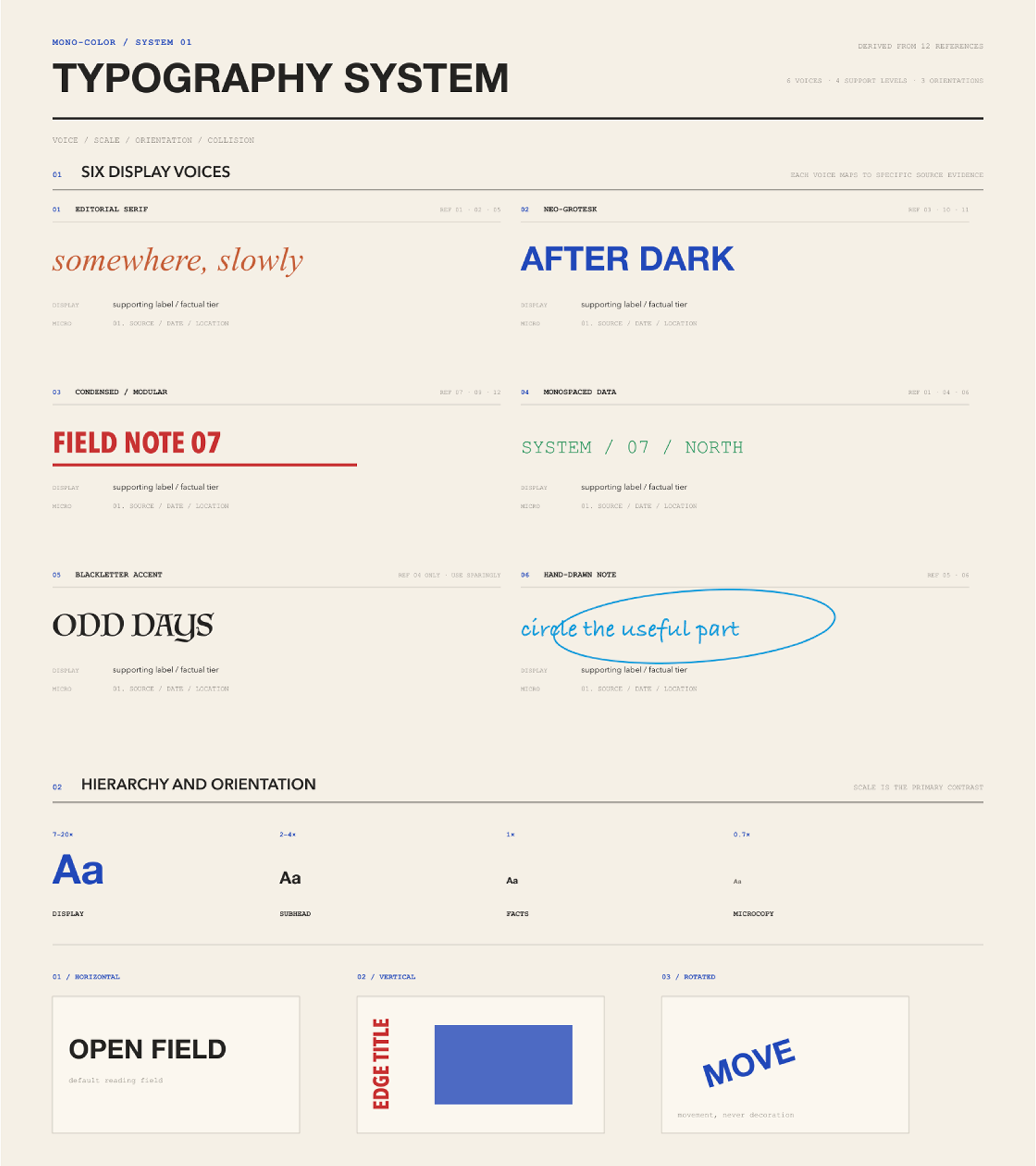
| Type | Content-responsive literary serif, cultural grotesk, condensed civic, programmatic, rotated, handwritten, or word-as-object roles |
| Output | Generated raster image, exact production prompt, and a short recipe |
Use cases
- Posters: events, parties, art exhibitions, city walks, and conceptual posters
- Social media: Xiaohongshu covers, WeChat article headers, podcast covers, and cultural commentary illustrations
- Brand materials: postcards, invitations, tickets, programs, menus, and packaging stickers
- Keepsakes: travel journals, photo album covers, and anniversary cards
- Books and publications: covers, title pages, chapter openers, and zine interiors
- Words: literary excerpts, poetry, and personal declarations
All of these formats can use a single ink to reduce production costs while retaining a distinctive visual identity.
How it works
1  Read the input       →  identify subject, intent, words, and image role
2  Choose the layout    →  image, specimen, declaration, object field, overprint, journal, or cover
3  Assign the plates    →  default to two assigned roles; switch to one plate when explicitly requested
4  Compose the page     →  preserve 25%–55% silence and add one deliberate disruption
5  Generate and inspect →  check ink count, identity, hierarchy, texture, and originality
Ink system
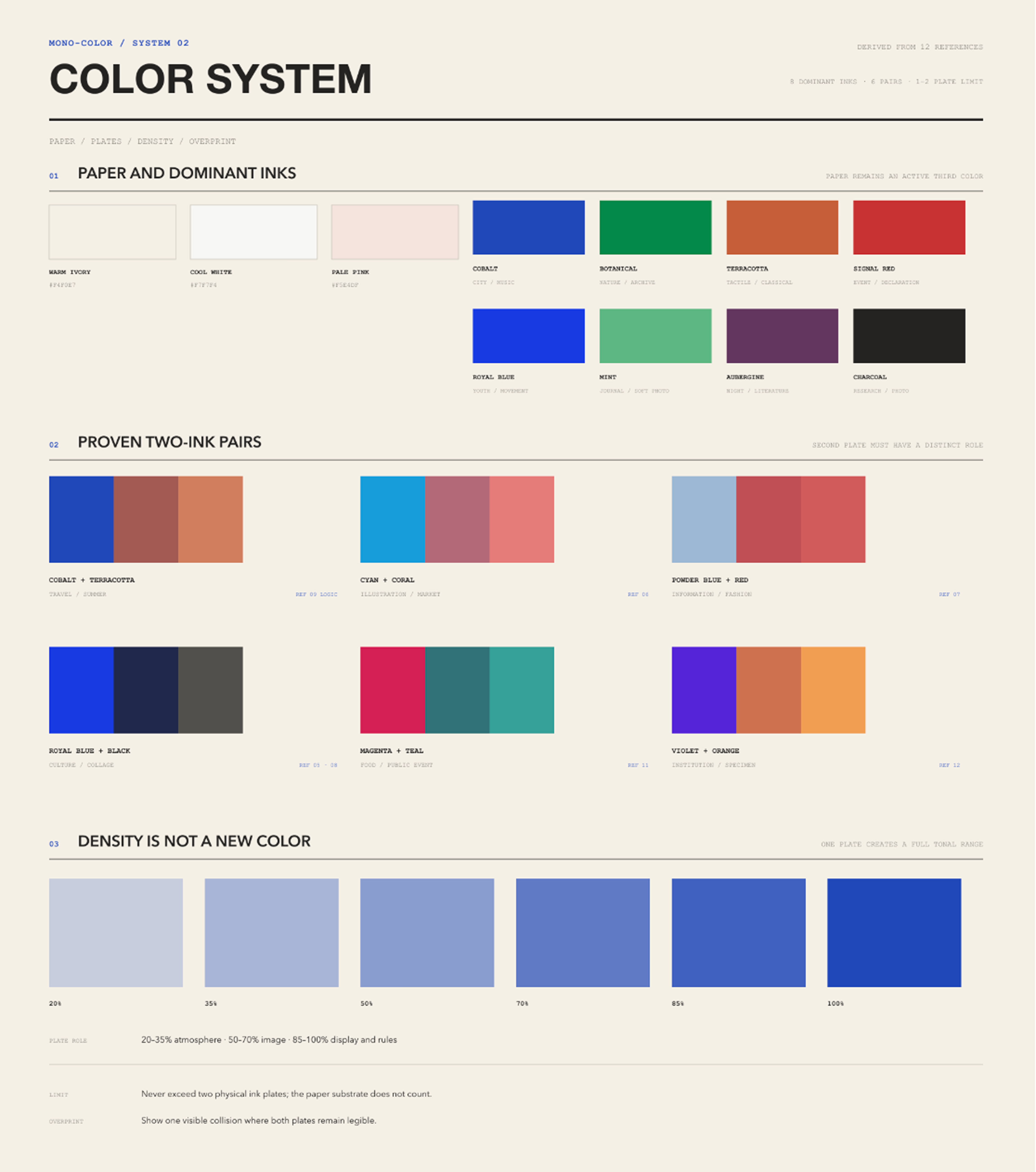
One-ink palette: Cobalt, Royal Blue, Botanical Green, Mint Green, Terracotta Orange, Signal Red, Aubergine, and Charcoal.
| Swatch | Ink | Hex |
|---|---|---|
 | Cobalt / Ultramarine | #2148B8 |
 | Royal Blue | #2058D4 |
 | Botanical Green | #008A4B |
 | Mint Green | #5EB783 |
 | Terracotta Orange | #C65F38 |
 | Signal Red | #C83232 |
 | Aubergine | #63365F |
 | Charcoal | #30343A |
Two-ink recipes: Powder Blue + Signal Red, Cobalt + Terracotta, Botanical Green + Oxblood, Charcoal + Signal Red, Electric Blue + Carbon, Mint Green + Charcoal, Ultramarine + Safety Orange, Cyan + Brick Red, and Tangerine + Slate Blue.
| Swatches | Two-ink recipe | Hex |
|---|---|---|
 | Powder Blue + Signal Red | #9EB8D3 + #C83232 |
 | Cobalt + Terracotta | #2148B8 + #C65F38 |
 | Botanical Green + Oxblood | #008A4B + #8F3434 |
 | Charcoal + Signal Red | #30343A + #C83232 |
 | Electric Blue + Carbon | #173AE3 + #242321 |
 | Mint Green + Charcoal | #5EB783 + #302D2E |
 | Ultramarine + Safety Orange | #263E99 + #E55D2B |
 | Cyan + Brick Red | #159DDA + #B64032 |
 | Tangerine + Slate Blue | #E46C2D + #4773A5 |
In two-ink work, the dominant plate normally carries 70%–85% of the printed area. The accent plate carries 15%–30% and must have a specific job such as dates, annotations, selected objects, or overprint intersections. The substrate is not a third color, and the darker color created where two plates overlap is not a third ink.
Substrate is adaptive, not nostalgic by default: Neutral White #FAFAF7 supports crisp cultural, social, event, and image-led work; Cool Gray #E9E9E5 supports architecture, technology, charcoal-led systems, and restrained branding; Pale Beige #F5F1E8 supports tactile, travel, food, intimate, archival, or explicitly nostalgic subjects. Limited inks and halftone do not automatically imply vintage styling.
Visual rules
- No more than two printing inks. Controlled two-ink is the default: 70%–85% dominant plate and 15%–30% accent plate, each with a distinct role. Explicit one-ink requests use one plate.
- Paper stays visible. The result is a printed page, not a digitally tinted monochrome wash.
- Mechanical reproduction leads. Photographs become dots, grain, clipped highlights, ink pooling, and mild registration drift between plates.
- Silence has structure. Empty paper occupies 25%–55% of the canvas and controls pacing.
- Type has tension and range. Choose one content-responsive display skeleton and one utility voice; use handwriting only as a short optional interjection. A series may change display categories instead of repeating one house treatment.
- Identity stays intact. Supplied people, objects, and scenes remain recognizable.
- References are grammar, not templates. At least four structural variables change from every supplied reference.
Not this
- not a full-color photograph with a monochrome filter
- not arbitrary two-color decoration or more than two printing plates
- not a glossy mockup, 3D render, gradient poster, or cinematic scene
- not a centered template, card grid, sticker collage, or decorative blob system
- not dense scrapbook grunge or torn-paper styling
- not automatically retro, yellowed, sepia, distressed, or nostalgic because the work uses halftone or limited inks
- not marketing copy, invented branding, fake sponsors, URLs, or QR codes
- not a reconstruction of a reference poster or artist signature
Install
Clone the repository into your Claude Code skills directory:
git clone https://github.com/yanliudesign/mono-color-skill.git \
	~/.claude/skills/mono-color
Restart Claude Code after installation. Other agent environments can load SKILL.md as the skill entry point.
Try it
Use mono-color to make a vertical poster about a midnight convenience store.
The exact headline is “still open”.
Turn this portrait into a cobalt one-ink editorial zine cover.
Keep the person's identity and expression.
Create a botanical-green risograph field note about ferns.
The title is “field note 07”.
Create an Ultramarine + Safety Orange overprint poster about city cycling.
Let the bicycle and oversized title cross in selected areas.
Turn this product into a Cyan + Brick Red repeated-object cover.
Keep one open zone for the title and factual microcopy.
Make a Signal Red one-ink party poster for a rooftop gathering.
Use “after sunset” as the headline and keep the date small.
Design a Charcoal + Signal Red exhibition poster about concrete architecture.
Use the red plate only for the date, location, and one geometric interruption.
Create a cobalt city-walk poster from this street photograph.
Turn the buildings into coarse halftones and title it “north by foot”.
Make a Terracotta Orange Xiaohongshu cover about a weekend flea market.
Use one oversized Chinese headline and leave at least one third of the paper empty.
Turn this host portrait into an Aubergine one-ink podcast cover.
Keep the face recognizable and use “the quiet hour” as the episode title.
Create a Botanical Green + Oxblood invitation for an independent bookstore opening.
Let green carry the paper texture and image; reserve oxblood for event details.
Transform these travel photographs into a Cobalt + Terracotta postcard series.
Keep the same grid across the set, but vary each crop and handwritten annotation.
Design a Mint Green + Charcoal poetry title page for the line “we kept the window open”.
Use no photograph, generous paper space, and one small archival-style note.
Delivery format
One run returns:
- a generated raster image when image-generation tools are available;
- the exact production-ready prompt used for generation;
- a recipe naming the print mode, exact ink palette, layout family, type pairing, print process, and originality changes.
If image generation is unavailable, the skill returns the production-ready prompt and states the limitation.
Stability and validation
Before prompt compilation, the skill resolves every request into a fixed recipe manifest. Unspecified requests use a 3:4 ratio, Neutral White substrate, contemporary editorial direction, 35% empty substrate, and deterministic palette and layout rules. The substrate may switch to Cool Gray or Pale Beige when the image and ink contrast call for it. Supplied photos default to faithful reproduction; requests for abstract, artistic, loose, experimental, or less realistic treatment switch to deterministic symbol extraction that preserves 2-4 identity anchors. Explicit user choices still take precedence within the two-ink and originality limits.
The design-system/ catalogs make the visual grammar reusable and inspectable. They separate color tokens, typography roles, composition geometry, carrier-specific signals, visual rhythm, and controlled print imperfections from the prose workflow. Catalog IDs are the shared contract between reference boards, recipes, and validation.
design-system/rhythm.json defines relaxation as uneven energy rather than uniformly reduced intensity. Each page selects one audacious focal event—oversized type, an extreme crop, one giant detail, a concentrated overprint, or an abnormal scale relationship—then releases the rest through paper, pale screening, and sparse functional type. Without a supplied photograph, people become 2-4 identifying anchors and partial crops instead of complete stock figures or a safe headline-left/photo-right split. Empty paper and unresolved edges now respond to the focal event instead of fixed quotas.
Controlled chance stays in the reproduction layer: contemporary work selects 0-2 restrained effects, while tactile, vintage, or archival-aging work selects 2-3 bounded effects such as uneven ink density, dry-edge breakup, halftone drift, registration drift, or one broken gesture. The stable recipe seed preserves the same marks across retries without moving the composition or reducing text readability.
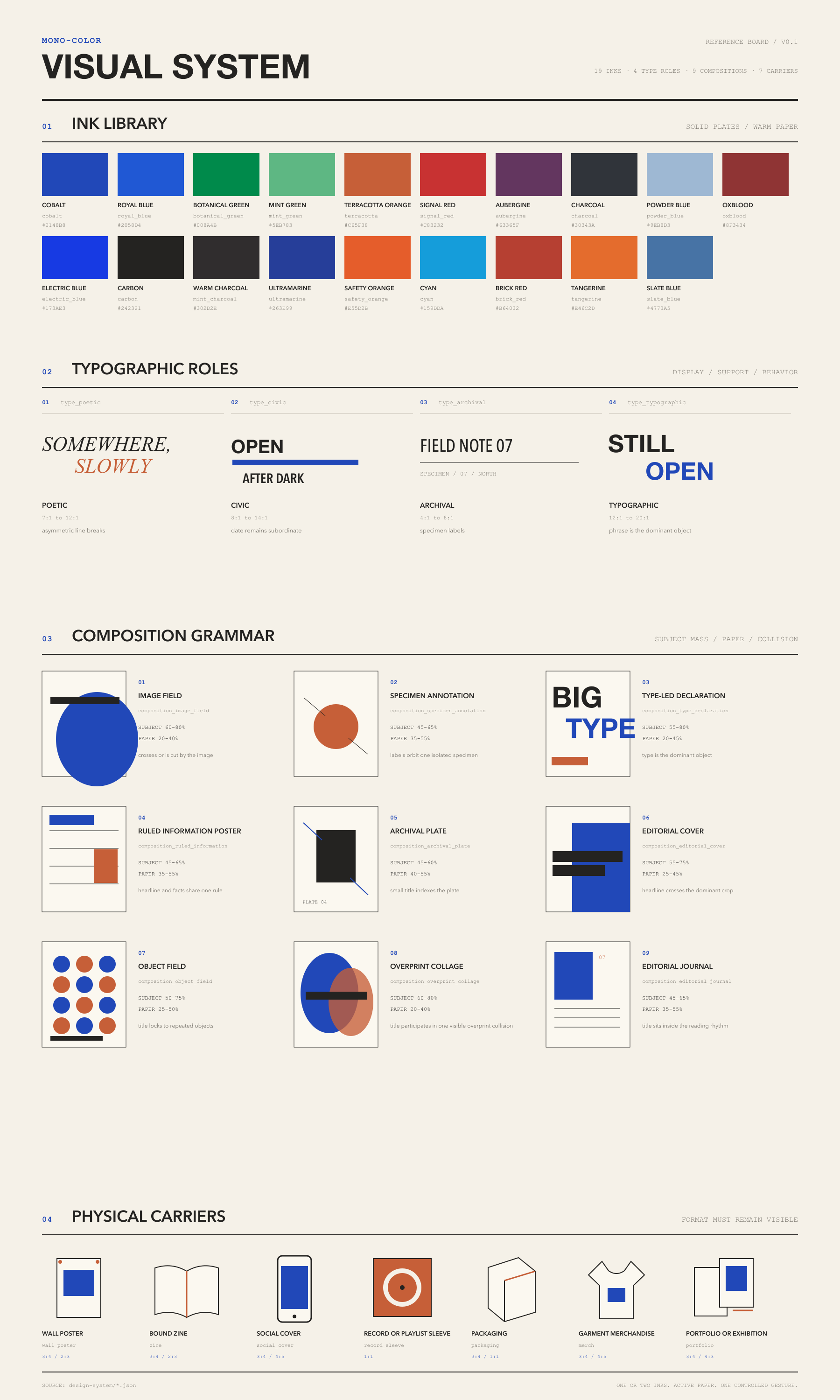
The four focused reference-analysis boards document the typography, color, layout, and style evidence behind the system:
Typography
Color
Layout
Style
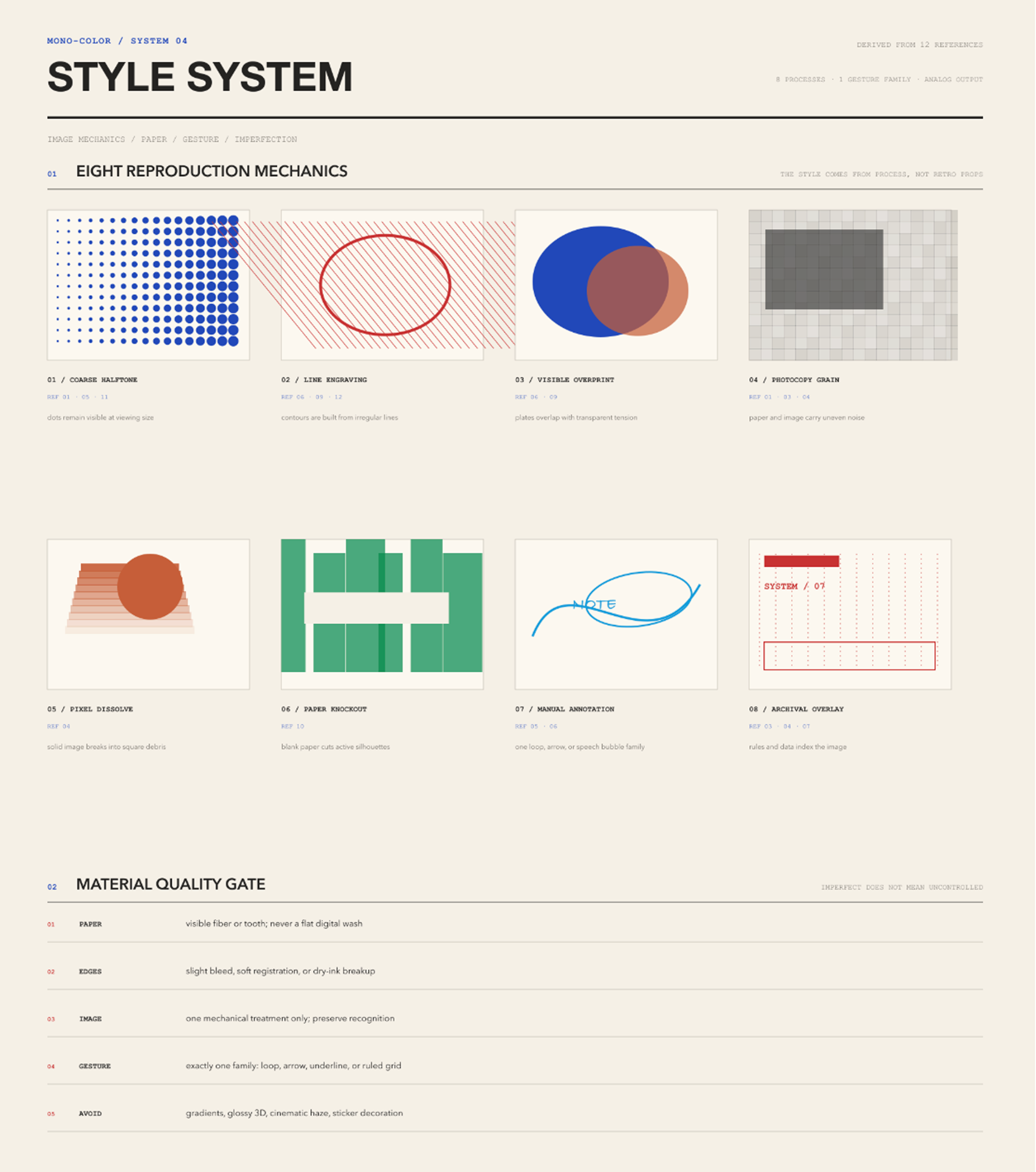
Regenerate the catalog-driven complete board after editing a catalog:
python3 scripts/build_design_system_board.py
The evaluation contract covers defaults, supplied portraits, botanical work, overprint, event information, long-form text, prompt-only output, conflicting color requests, repeated objects, and reference-copying requests. Run it locally with:
python3 scripts/validate_evals.py
python3 scripts/validate_design_system.py
GitHub Actions runs the same contract on every pull request and push to main.
Repository layout
mono-color-skill/
├── .github/workflows/ # Continuous validation
├── design-system/    # Machine-readable color, composition, rhythm, and print patterns
├── examples/         # Original generated examples shown in the READMEs
├── scripts/          # Evaluation and design-system validators
├── swatches/         # One-ink and two-ink palette previews
├── SKILL.md          # Trigger rules, visual system, workflow, and quality gate
├── README.md         # English documentation
├── README.zh.md      # 中文说明
├── CHANGELOG.md      # Release history
└── evals/
		├── evals.json    # Representative prompts and deterministic assertions
		└── schema.json   # Evaluation contract schema
Originality
This skill extracts system-level qualities such as palette, print process, spacing, hierarchy, and communication tone. It does not copy a reference's composition, wording, labels, logos, border system, or distinctive arrangement.
When a user supplies a photograph, the subject is preserved as content while the crop, screening, grid, type placement, and metadata treatment are newly constructed.
License
The source code, skill instructions, and scripts are available under the MIT License.
Original examples by Yan Liu in examples/ are © 2026 Yan Liu and are not covered by the MIT License. The twelve third-party research references remain the property of their respective creators and rights holders. See the Visual Asset License and Visual References and Attribution.
Created by Dreameryanyan · LinkedIn · X